




eSIM Coverage Maps vs. Network Provider Maps
https://www.zimconnections.com/esim-coverage-maps-vs-network-provider-maps/
 SHARE
SHARE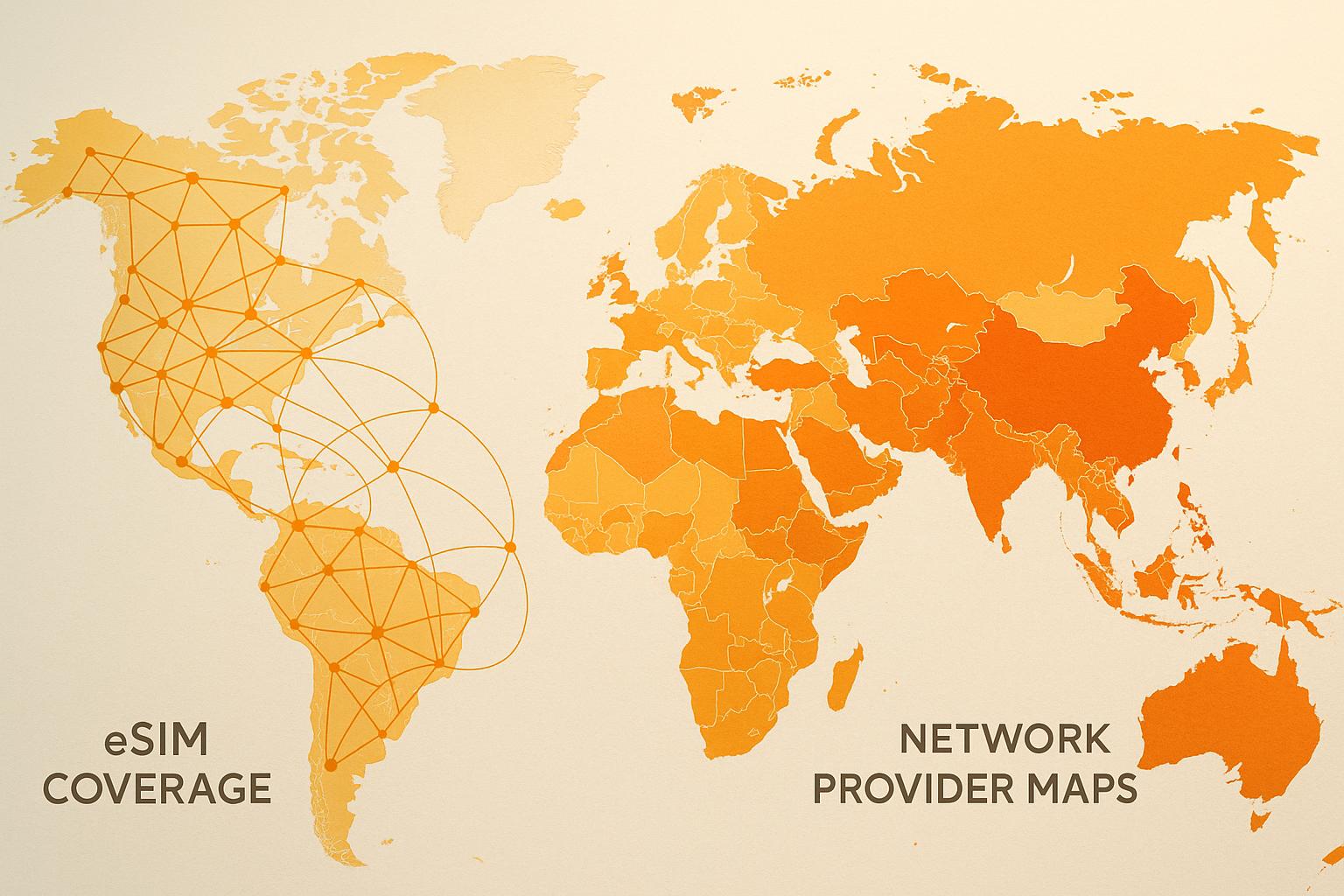
Want to stay connected while travelling? Here’s what you need to know about eSIM and network provider maps.
- eSIM coverage maps show where eSIM providers offer connectivity, often spanning 190–200+ countries by partnering with multiple local carriers. They’re ideal for international travellers and provide a broad overview of global coverage.
- Network provider maps focus on a single carrier’s coverage, offering detailed insights into specific regions, including signal strength and technology (3G, 4G, 5G). They’re better suited for domestic use or single-country trips.
Both types rely on predictive models, not real-world testing, meaning signal quality may vary. eSIM maps are updated more frequently, while network provider maps are often less dynamic. For global travel, eSIM maps are more practical, while network maps are better for localised needs.
| Feature | eSIM Coverage Maps | Network Provider Maps |
|---|---|---|
| Coverage Scope | 190–200+ countries | Single carrier, typically local |
| Detail Level | Broad regions, multiple carriers | Specific areas, one carrier |
| Update Frequency | More frequent | Quarterly or semi-annually |
| Best For | International travellers | Domestic users |
| Technology Display | 3G, 4G, 5G from multiple networks | 3G, 4G, 5G for one network |
Bottom line: Choose eSIM maps for flexibility in global travel. Opt for network provider maps for detailed local coverage.
What Are eSIM Coverage Maps?
eSIM coverage maps are digital tools that show where eSIM providers offer mobile connectivity services around the world. These maps compile data from local mobile operators, giving users a clear picture of international roaming options.
For example, ZIM Connections provides coverage in over 200 destinations globally by partnering with local providers. This ensures reliable connectivity for both travellers and businesses.
How eSIM Coverage Maps Work
eSIM providers establish their coverage through agreements with local telecom operators in different countries. These partnerships allow them to integrate local networks into detailed maps.
The process involves collecting data on local telecom infrastructure, international roaming agreements, and regional regulations. Some of the top eSIM providers have networks spanning over 190 countries and regions, offering extensive global connectivity.
This system provides flexibility. Since eSIM providers work with multiple local operators, coverage quality can differ depending on the location. A single eSIM can connect to several local networks, and the maps clearly indicate available technologies like 3G, 4G/LTE, and 5G.
How Coverage Is Displayed
eSIM coverage maps are interactive, letting users explore where services are available. You can click on specific countries to view detailed information, making it easy to assess your connectivity options.
Zooming in on a region or city reveals details such as network types, available data plans, pricing, and speeds. For instance, ZIM Connections’ map shows information on 5G/4G connectivity, unlimited data options, and local phone numbers. This feature helps users understand not just where they can connect, but also the services and costs involved.
Some maps even highlight whether calls and SMS are included or require VoIP apps. They may also show features like hotspot and tethering support. This level of detail makes eSIM maps particularly useful for hassle-free international travel.
Advantages of eSIM Coverage Maps
eSIM coverage maps come with a range of benefits, making them a valuable tool for global travellers and users. Their extensive geographical reach stands out – unlike traditional single-carrier maps, eSIM maps can cover between 190 and 200+ destinations through partnerships with local networks.
One major advantage is the ability to stay connected across multiple countries with a single eSIM. There’s no need to swap SIM cards or juggle multiple local plans, making it an ideal solution for those travelling across various destinations.
These maps are updated in real time, ensuring they reflect the latest coverage information. The digital activation process is quick, offering instant internet access while keeping costs lower than traditional international roaming fees. By comparing coverage details for different regions, users can select plans that suit their specific travel needs.
Flexibility in plan options is another key benefit. You can customise services like 5G/4G internet and local phone numbers to match your requirements. For businesses managing a global workforce, eSIMs provide a streamlined solution, reducing the complexity and expense of handling separate network arrangements in each country. This integrated approach simplifies planning and ensures smooth connectivity during international travel.
That said, coverage can change, so it’s always wise to check the latest details with your provider before setting off.
What Are Network Provider Maps?
Network provider maps are visual guides created by mobile network operators to showcase their coverage areas. Unlike eSIM coverage maps, which combine data from multiple carriers across different countries, these maps focus exclusively on a single carrier’s network infrastructure and service zones. They are designed to help customers identify where they can expect reliable connectivity with that specific provider. For instance, major telecom operators often maintain these maps to highlight their service reach.
However, the main drawback of network provider maps is their narrow focus. They only display the coverage of one carrier, typically limited to a specific country or region. This makes them less versatile than eSIM coverage maps, which present aggregated data from multiple local carriers across various global destinations. Next, let’s dive into how these maps visually represent coverage.
How Network Provider Maps Show Coverage
Network provider maps rely on colour coding to indicate network types and signal strength. Darker shades usually represent stronger signals, while lighter colours or blank areas indicate weaker or no service. Users can often zoom in to see detailed coverage at the city level.
It’s worth mentioning that these maps usually depict theoretical coverage based on factors like tower placement and signal propagation models rather than actual user experiences. In practice, even if a map shows full coverage, real-world connection quality can vary due to factors like distance from transmission towers or the density of local infrastructure. While these maps provide a clear visual overview, they come with notable limitations.
Drawbacks of Network Provider Maps
Network provider maps have several shortcomings that can limit their usefulness, especially for travellers or those in remote areas. For starters, they don’t adequately account for how signals behave indoors, and coverage can differ significantly between urban areas and rural or mountainous regions.
Another issue is their single-provider approach. If a carrier has poor coverage in a specific area, these maps offer no alternatives. This limitation becomes even more pronounced for international travel, as these maps generally focus on a single country or rely on limited roaming agreements. Travellers often need to consult multiple maps or additional roaming information to piece together a complete picture of connectivity abroad. Additionally, these maps rarely reflect the high roaming fees users might face when relying on their domestic carrier overseas.
An added drawback is that network provider maps are updated less frequently – often quarterly or semi-annually – compared to eSIM coverage maps, which are refreshed more regularly. This slower update cycle can lead to outdated information, leaving travellers unaware of recent network upgrades or changes.
While network provider maps can help users understand a single carrier’s domestic coverage, their limited scope and occasional inaccuracies underscore the need for more comprehensive and up-to-date solutions for those seeking reliable connectivity.
Main Differences Between eSIM and Network Provider Maps
eSIM coverage maps and network provider maps serve different purposes, and these differences go beyond just how they look. They significantly influence how travellers and businesses plan their connectivity, especially when crossing borders.
Coverage Area and Accuracy
One of the biggest distinctions lies in their geographical reach. eSIM coverage maps typically represent connectivity across 185–200+ destinations worldwide, pulling data from multiple carriers in each region. For example, ZIM Connections covers over 200 destinations, showcasing the global reach of eSIM solutions.
On the other hand, network provider maps are tied to a single carrier’s network. These maps are more suited for assessing regional or national coverage but lack relevance for international travel. They also don’t account for roaming agreements or the ability to switch between carriers.
Both types of maps have accuracy issues. Network provider maps often overestimate their coverage, as they don’t factor in obstacles like building penetration or terrain. These maps typically show theoretical coverage based on tower locations rather than real-world user experiences. eSIM coverage maps, while also limited by the physical realities of mobile networks, aggregate data from multiple carriers. This aggregation can make them more reliable in rural areas, where users might switch to a stronger network through carrier partnerships. In contrast, network provider maps only show the infrastructure of a single carrier. For instance, US Cellular directly covers just 10% of the United States with its 4G network, relying heavily on roaming agreements with Verizon, AT&T, and T-Mobile to fill in the gaps.
Rural areas are challenging for both types of maps due to sparse cellular towers and natural obstructions like mountains or forests. These factors also affect how current and detailed the coverage data remains, which ties into the next point.
Update Frequency and Live Data
Another key difference is how often these maps are updated. Network provider maps are usually refreshed periodically as companies expand their infrastructure. However, these updates can lag, sometimes leaving users with outdated information about recent improvements.
eSIM providers, particularly those catering to international travellers, tend to update their maps more frequently. This is because they need to reflect changes in carrier partnerships and network availability across multiple regions. Many eSIM platforms even offer app-based tools that incorporate recent updates. Despite this, neither type of map provides real-time updates on issues like network congestion or temporary outages. Both rely on relatively static data, so it’s always a good idea to check directly with your service provider before travelling.
Network Types and Data Sources
The way these maps gather and display network information also sets them apart. Network provider maps rely on data from a single carrier, detailing where technologies like 3G, 4G, and 5G are available.
eSIM coverage maps, however, pull data from multiple sources, including local telecom operators, international roaming agreements, and regulatory records. This approach allows eSIM maps to show the availability of various network types (like 3G, 4G/LTE, and 5G) across their coverage areas. For example, eSIM plans from providers like ZIM Connections let users access multiple carriers. If one carrier’s signal is weak, users can switch to another, offering a practical advantage over single-carrier maps.
That said, this multi-source method isn’t without its challenges. eSIM providers must verify coverage across numerous carriers and regions, which can lead to inconsistencies. Local infrastructure, international agreements, and regulatory rules all play a role in shaping the data, making it harder to maintain accuracy across 200+ destinations. Additionally, while both map types indicate where different network generations are available, neither consistently displays real-time information about network speed or quality. For specific performance details, it’s best to consult your service provider directly.
sbb-itb-273ea09
Usability and Real-World Applications
The usefulness of coverage maps goes beyond just the data they provide. Their design and how they align with your specific needs – whether for travel or business – play a big role in determining their value. Both eSIM and network provider maps offer distinct advantages depending on their usability and interface.
Interface and Ease of Use
eSIM coverage maps are tailored for international travellers. They often feature interactive designs that let you view coverage for multiple countries and providers all in one place. These maps typically display detailed information about data plans, pricing, and speeds, making it easy to check if your chosen provider covers all the regions you’re planning to visit without jumping between different tools or websites. For instance, ZIM Connections offers a user-friendly interface that covers over 200 destinations, allowing you to compare plans, check pricing, and assess connectivity with ease.
On the other hand, network provider maps focus on a single carrier’s coverage within specific regions. They prioritise showing distinctions between 4G and 5G services but tend to place less emphasis on international roaming options. These maps are particularly helpful for domestic users, offering detailed local coverage insights, such as signal strength in specific UK areas.
A standout feature of eSIM maps is the ability to compare destinations side by side. Providers like Airalo, Maya Mobile, and GlobaleSIM make it simple to evaluate options for different regions, whereas with network provider maps, you’d need to manually check each carrier’s coverage separately.
However, it’s important to note that coverage maps don’t account for factors like indoor environments or network congestion. Even if a map shows full coverage, things like thick walls, underground locations, or crowded areas can limit your signal. Additionally, crowdsourced data often skews towards highways and overlooks residential streets or parks, which can affect accuracy.
To get a more complete picture, consider pairing carrier maps with crowdsourced signal apps. These tools provide extra metrics like RSRP, RSRQ, and SINR, which give deeper insights into signal quality beyond just basic coverage. These details can help you make better decisions based on your location and network conditions.
When to Use Each Map Type
The type of map you choose should align with your specific travel plans and connectivity needs. eSIM coverage maps are ideal for multi-country travellers, digital nomads, and business professionals who need reliable connectivity across several destinations. For example, if you’re visiting the UK, France, and Germany on a business trip, an eSIM coverage map lets you confirm coverage for all three countries and compare data plan options without switching between different network provider maps. Providers like ZIM Connections offer regional plans that simplify connectivity, making them a great choice for businesses with international operations or remote teams.
Regional eSIM plans are also useful for cross-border travel, as they reduce the hassle of roaming handovers. For instance, during a rail journey across Europe, a regional eSIM can help ensure smoother connectivity transitions. However, it’s still a good idea to verify coverage for each leg of your trip using local operator data from tools like OpenSignal. Providers such as Maya Mobile and Holafly offer regional and global plans, clearly displayed on interactive maps, that cater to businesses operating across continents like Europe and Asia.
For domestic or single-country trips, network provider maps are often the better choice. For example, if a UK resident is planning a trip within the United States, a network provider map can provide detailed insights into 4G and 5G coverage across different states. These maps are especially helpful for users who need granular information about signal strength and network type in specific local areas.
Both map types face challenges in rural or remote areas. Since eSIMs rely on the same mobile networks as traditional SIM cards, their coverage in these regions is limited by the network infrastructure itself. If you’re travelling through rural or alpine areas, tools like CellMapper can help verify low-band coverage along your route. It’s also smart to carry a backup eSIM for areas where coverage gaps are known.
For city-based remote work, focus on metrics like SINR and latency near your accommodation or co-working space instead of relying solely on coverage maps. When visiting high-density venues like stadiums or conventions, choose operators that show mid-band or 5G coverage supported by small cells nearby. And for areas with known connectivity issues, having offline maps and backup options can save you from disruptions.
Before committing to any plan, double-check coverage with your eSIM provider, as it can vary over time. Asking locals or colleagues about the best-performing carriers in your area is also a smart move. For international trips, selecting regional eSIM plans that cover broader areas like Western Europe or North America can simplify roaming and improve reliability.
How to Choose the Right Map
Picking the right coverage map can make a big difference in ensuring seamless connectivity during your travels. Whether you’re a frequent globetrotter or an occasional tourist, understanding the differences between eSIM coverage maps and traditional network provider maps can save you both time and money.
What to Consider
Your travel plans are the starting point. If you’re heading to multiple countries – say, the UK, France, and Germany for a business trip – an eSIM coverage map offers a unified view of connectivity options across all destinations. This approach spares you the hassle of checking individual network provider maps for each country. On the other hand, if you’re sticking to a single country, a network provider map might give you more detailed insights into local 4G and 5G coverage.
How often you travel internationally also matters. If you’re a frequent flyer, eSIM coverage maps, which span over 190 countries, can be a lifesaver. For occasional travellers visiting only one or two places, a combination of a network provider map and local SIM options might be more economical.
Think about your network needs, too. If 5G is crucial for activities like video calls or streaming, double-check its availability on both eSIM and provider maps. Keep in mind that 5G performance can vary based on local conditions.
Device compatibility is another key factor. Not all smartphones support eSIM technology, so ensure yours does. Check if your device allows multiple profiles or dual SIM setups and confirm it’s unlocked for network switching.
Budget is always a consideration. Compare data pricing across providers. Some offer unlimited plans at fixed rates, while others charge by data usage. Estimate how much data you’ll need and weigh the costs of an eSIM plan, UK roaming rates, or a local SIM card.
The quality of local carrier partnerships can significantly impact your connection. eSIM providers vary in their agreements with local carriers, which determines the network types available (3G/4G/5G) and the reliability of connections, especially in rural areas. For instance, ZIM Connections offers strong 5G/4G options in over 200 destinations, showcasing how valuable robust carrier partnerships can be.
Lastly, decide between a regional or single-country plan. Regional plans cover multiple destinations under one eSIM profile, making roaming simpler. Single-country plans, however, require separate purchases for each destination.
Once you’ve considered these factors, you’ll be better equipped to choose a map and plan that suits your travel needs.
Tips for Better Connectivity
After narrowing down your options, these practical steps can help you secure reliable connectivity during your trip:
- Compare multiple maps. Visit various eSIM provider websites and cross-check their coverage maps for your destination. Look into which local carriers they partner with, as this directly affects connection quality.
- Use third-party tools. Apps like Opensignal, nPerf, and Tutela provide real-world performance data, including connection speeds and signal strength. These tools rely on crowdsourced data, offering insights beyond what standard coverage maps show. Travel forums, such as Reddit, are also great sources for recent traveller reviews on network performance in specific locations.
- Check specific areas. Even if a map shows full coverage, signal strength can vary – especially indoors or in remote regions. For rural or alpine areas, make sure low-band coverage is available along your route. Carrying a backup eSIM can be helpful if you anticipate coverage gaps.
- Verify coverage before travelling. Network coverage can change, so confirm details with your provider ahead of time. You can also consult local telecom websites or tools like the GSMA coverage map, which lets you zoom into specific regions and compare operator performance.
- Plan for poor coverage. If you face connectivity issues, consider switching to a different eSIM provider, upgrading to a premium plan that supports carrier switching, or manually selecting a network via your device settings. Alternatively, purchasing a local SIM card can provide more stable service and access to in-person support.
For those relying on connectivity for remote work, focus on metrics like SINR and latency near your accommodation or co-working space. In crowded venues like stadiums or conventions, choose operators offering mid-band or 5G coverage supported by nearby small cells. And if you’re heading to areas with known connectivity challenges, download offline maps and have a backup plan to avoid disruptions.
Lastly, test your eSIM activation before you leave. Make sure your provider supports your device’s bands to avoid any last-minute surprises. A little preparation goes a long way in ensuring smooth connectivity during your travels.
Conclusion
Deciding between eSIM coverage maps and network provider maps ultimately depends on your travel habits. Network provider maps focus on detailed coverage for a single carrier, making them a suitable choice if you plan to stay within one network’s area. However, they can be limiting for international travellers who need a broader perspective across multiple destinations.
On the other hand, eSIM coverage maps offer a global outlook, spanning over 190 countries. This makes them particularly useful for frequent travellers crossing borders often. Instead of juggling multiple maps for each destination, eSIM coverage maps let you compare providers, review data plans, and check network speeds – all in one place. This streamlined approach is exemplified by ZIM Connections.
ZIM Connections stands out by offering eSIM voice and data plans across more than 200 destinations worldwide. Their services include instant 5G/4G connectivity, local phone numbers, and hassle-free digital activation. Whether you need a local plan for the UK, a regional plan for Europe, or a global plan covering over 125 countries, their platform ensures you’re connected the moment you arrive. This multi-destination functionality highlights how eSIM coverage maps simplify connectivity for both business and leisure travellers.
That said, neither map type is without limitations. Both struggle to account for real-world issues like indoor signal loss or interference caused by terrain. Coverage in rural areas also remains a challenge due to fewer cellular towers and the distances between them. The key distinction lies in their scope: network provider maps are tied to one carrier’s network, while eSIM coverage maps offer a range of options tailored to your travel needs.
For those venturing across multiple countries, eSIM coverage maps provide the flexibility and comprehensive insight needed to maintain reliable connectivity. By simplifying connectivity decisions, they let you focus on enjoying your journey, ensuring you stay connected wherever your travels take you. This comparison underscores how choosing the right map can make all the difference for today’s travellers.
FAQs
How do eSIM coverage maps compare to traditional network provider maps for staying connected across multiple countries?
eSIM coverage maps, such as those offered by ZIM Connections, are created to provide reliable connectivity in over 200 destinations worldwide. Unlike traditional network provider maps that are often restricted to specific countries or regions, eSIM maps give users the freedom to switch between networks effortlessly using just one eSIM.
This makes life easier for both travellers and businesses, offering dependable 4G/5G internet, unlimited data plans, and even local phone numbers – all without juggling multiple physical SIM cards. With straightforward activation and compatibility across many devices, eSIMs make staying connected hassle-free, whether you’re exploring new cities or crossing continents.
What should I consider when comparing eSIM coverage maps to network provider maps for an international trip?
When looking at eSIM coverage maps versus traditional network provider maps, it’s essential to consider three key aspects: accuracy, usability, and the features they provide. A good coverage map should make it easy to see where you can expect reliable connectivity, especially if you’re planning to use it in a specific destination.
eSIMs, like those from ZIM Connections, offer a convenient option for travellers, providing seamless connectivity across more than 200 destinations. With benefits such as prepaid plans, 5G/4G internet access, and local phone numbers, eSIMs make staying connected abroad much simpler. Plus, their ability to work across multiple destinations with a single eSIM eliminates the hassle of juggling multiple physical SIM cards or dealing with local providers.
How often are eSIM coverage maps updated, and why does this matter for international travellers?
eSIM coverage maps are refreshed regularly to keep up with changes in network reach, infrastructure improvements, and the addition of new service areas. While the update schedule can differ between providers, having precise and current maps is crucial for dependable connectivity.
This is especially important for international travellers. Updated maps allow them to plan their journeys with confidence, knowing exactly where they’ll have strong signal coverage. Services like ZIM Connections, which offer eSIM plans usable across multiple destinations, rely on these maps to guarantee smooth and uninterrupted connectivity wherever you travel.