



How Data Alerts Help Avoid Roaming Charges
https://www.zimconnections.com/how-data-alerts-help-avoid-roaming-charges/
 SHARE
SHARE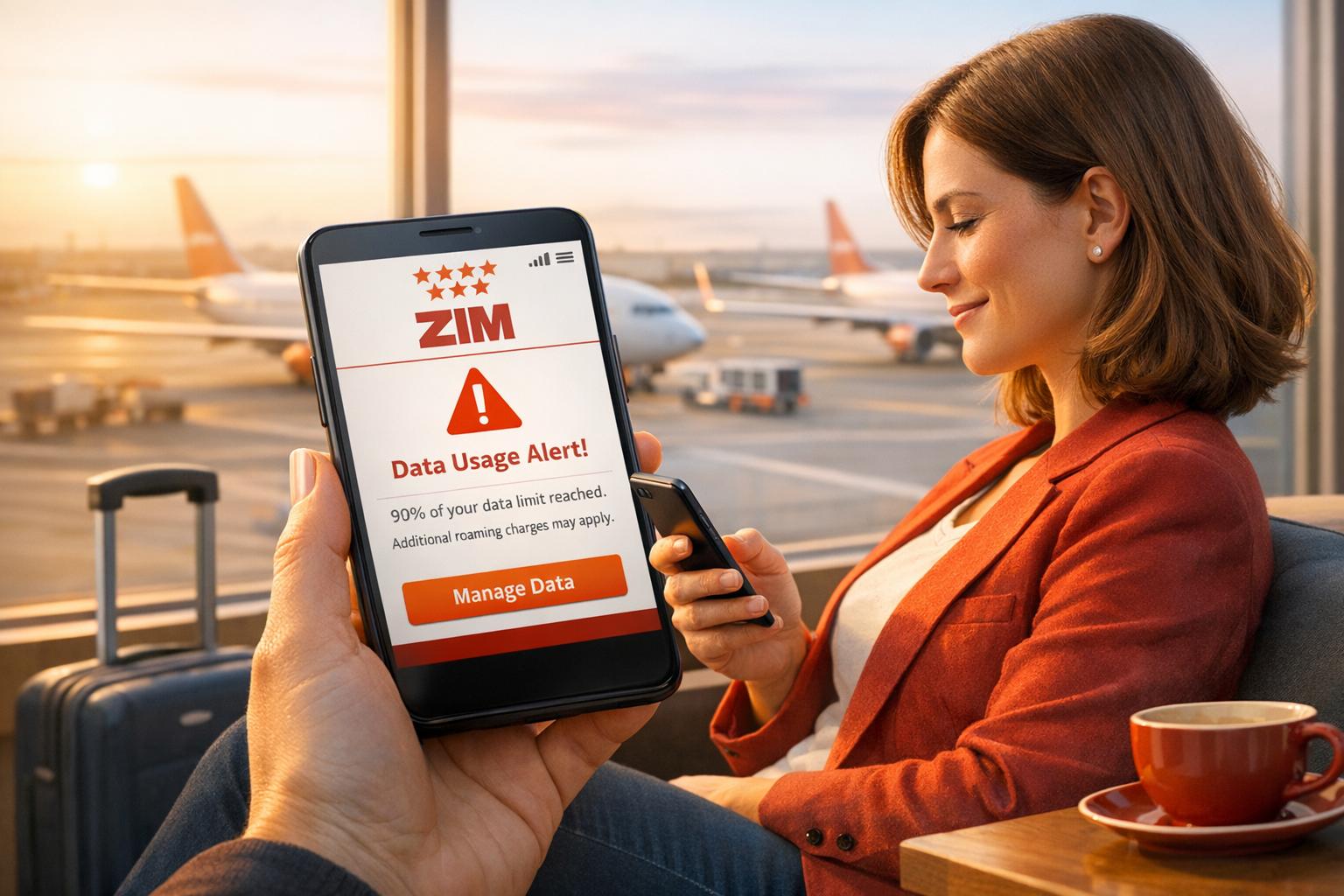
Unexpected roaming charges can ruin your trip. Since Brexit, UK travellers face higher roaming fees, with some providers charging up to £6 per MB. Background data usage – like app updates and email syncing – often contributes to these costs, even when your phone seems idle. Real-time data alerts and prepaid eSIM plans are practical solutions to stay in control. Here’s how they help:
- Data Alerts: Notify you when you’re nearing your limit, allowing you to switch to Wi-Fi or adjust settings.
- Prepaid eSIM Plans: Offer upfront pricing and usage tracking, avoiding surprise bills.
- Tips to Save Data: Disable background usage, set limits, and use tools like Low Data Mode.
For example, ZIM Connections provides regional eSIMs with real-time tracking across 200+ destinations. These tools empower you to manage your data and avoid hefty charges while travelling.
UK Roaming Charges After Brexit: Key Statistics and Cost Comparisons
How Roaming Charges Build Up
What Causes Roaming Charges
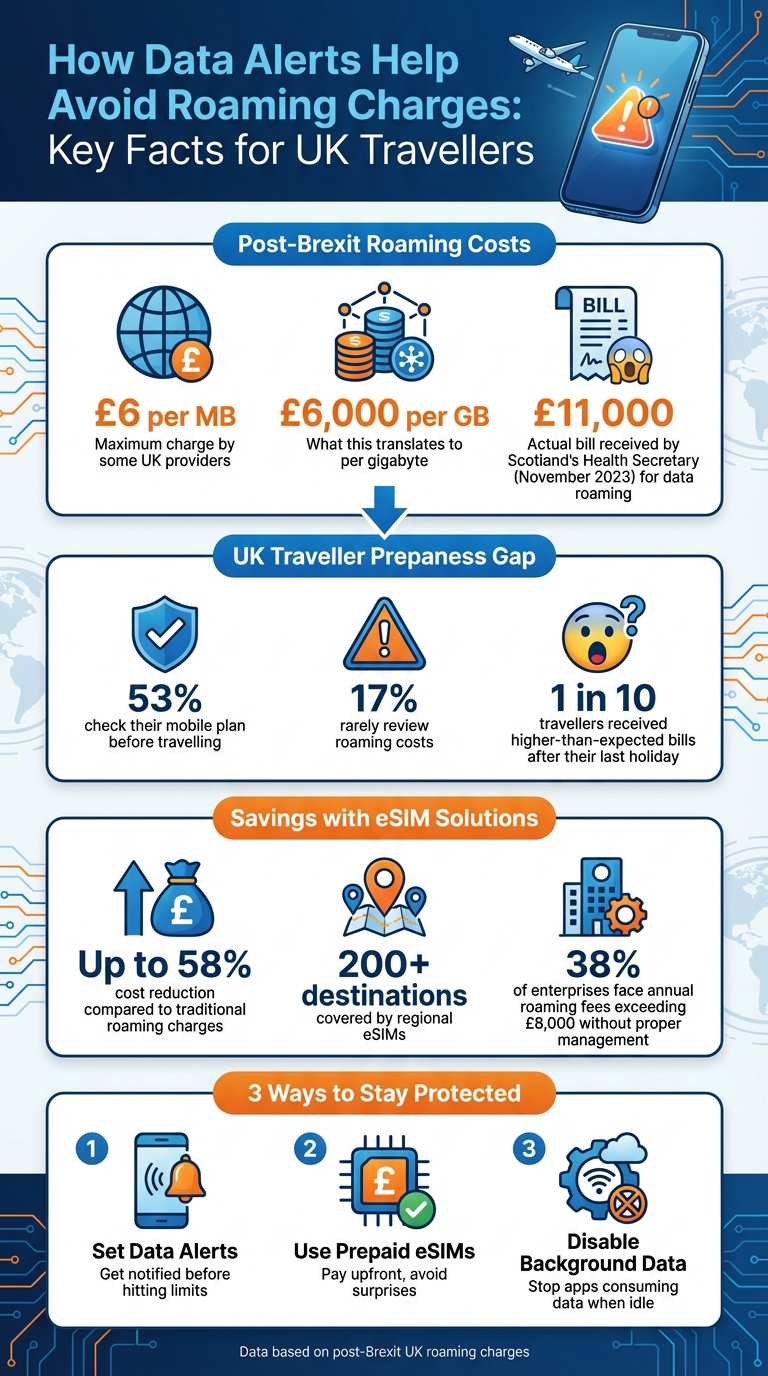
Roaming charges can pile up faster than you might expect, often because your phone starts using data the moment it connects to a foreign network. When you cross an international border, your device automatically links to a partner network abroad – and that’s when the costs start adding up. Some UK providers charge up to £6 per megabyte, which astonishingly amounts to £6,000 per gigabyte.
Even when your phone seems idle, background processes like app updates, email syncing, cloud backups, and location services can quietly consume data. These hidden activities, combined with more obvious data-heavy tasks like streaming or using your phone as a hotspot, can quickly drain your allowance. A striking example of this occurred in November 2023, when Scotland’s Health Secretary Michael Matheson received a nearly £11,000 bill for data roaming. His sons had been streaming football matches on his work iPad while on holiday. Recognising these triggers is crucial to understanding how easily roaming charges can spiral out of control.
Roaming Issues for UK Travellers
For UK travellers, the situation has become even trickier post-Brexit. The end of free EU roaming has brought back daily charges and stricter fair-use policies. Many UK networks now enforce additional fees and impose lower roaming allowances compared to domestic plans. Surpassing these limits can quickly lead to hefty extra charges.
"Many tourists still assume they have the same roaming privileges they enjoyed before Brexit, but the reality is that these benefits no longer apply." – Travel And Tour World
A significant number of travellers remain unaware of these changes. Research shows that 53% of people check their mobile plan before travelling, while 17% rarely review roaming costs. This lack of preparation, coupled with accidental roaming near borders – where devices connect to foreign networks without users realising – leads to unexpectedly high bills. In fact, one in ten travellers reported either running out of data or receiving a higher-than-expected bill after their last holiday.
How to Travel and Not Get SCREWED by Roaming Fees
How Real-Time Data Alerts Function
Real-time data alerts keep an eye on your data usage through device software and mobile apps, sending you notifications as you approach your pre-set limits. This system works in two ways: through your network operator’s backend systems and directly on your smartphone. By using both methods, you’re always in the loop about your data consumption.
Network operators often send alerts via SMS, email, or app notifications as you get close to your data limit. They also provide online portals or mobile apps where you can check your usage in real time. Whether you rely on your carrier, your smartphone, or an app from your eSIM provider, there are plenty of tools to stay informed.
Types of Data Alerts and Monitoring Tools
Your smartphone comes with built-in tools to help you track data usage in real time. On iPhones, you can find "Current Period" and "Current Period Roaming" data usage under Settings > Mobile Data. This section shows how much data each app is using. iOS also includes Low Data Mode to help reduce usage and even lets you disable mobile data for specific apps. On Android devices, you’ll find features like Digital Wellbeing to monitor app activity and screen time, along with a Data Saver mode that cuts down on background data consumption across apps and services.
Some eSIM providers take this a step further with dedicated widgets. For example, Airalo offers an iOS widget that displays your eSIM data usage right on your home screen. It even integrates with Siri, so you’ll get alerts when your data is running low. These tools ensure you have multiple ways to keep tabs on your usage, whether through your carrier, your device, or your eSIM app.
Benefits of Instant Usage Awareness
The biggest perk of real-time alerts? Avoiding surprise charges. When you get a notification about nearing your data limit, you can take action right away – switch to Wi-Fi, turn off background data for apps, or delay large downloads. This is especially useful when travelling with regional eSIMs, as it lets you monitor usage in different locations and stay within your allowance.
sbb-itb-273ea09
How to Use Data Alerts to Prevent Roaming Charges
Managing Your Data Allowance
Avoiding unexpected roaming charges starts with setting clear data limits. Both iPhone and Android devices allow you to configure alerts that notify you when you’re nearing your data cap. For instance, if you’ve purchased a 10 GB eSIM package, consider setting a warning at 8 GB. This gives you enough time to adjust your usage before hitting your limit. On devices like Samsung Galaxy and Google Pixel, you can go a step further by setting up hard limits in the Data Usage settings. Once the threshold is reached, mobile data is automatically disabled, keeping you in control.
It’s also helpful to align your billing cycle with your travel dates. This ensures your tracking is accurate and makes it easier to monitor your usage. Over time, reviewing your data statistics can help you fine-tune these thresholds.
After setting your limits, make sure background processes don’t quietly eat into your allowance.
Stopping Background Data Usage
Some apps are notorious for consuming data in the background, with social media platforms like Facebook, TikTok, and Instagram, and streaming services such as Spotify, often being the biggest offenders.
Before your trip, disable automatic app updates and downloads to avoid unnecessary background data use. On iPhone, you can enable Low Data Mode by navigating to Settings > Mobile Data, selecting your active eSIM line, then choosing Data Mode and turning on Low Data Mode. This will pause automatic updates and other background tasks. For Android users, activate Data Saver Mode by going to Settings > Connections > Data Usage > Data Saver. This reduces background data usage across all apps. Additionally, consider turning off push notifications and background refresh for apps you don’t need while travelling.
Using Alerts with Regional eSIMs
Regional eSIM plans work well with data alerts, making it easier to monitor your usage across multiple countries under a single allowance. Many regional eSIM providers, such as ZIM Connections, include built-in alert systems that sync with your device’s data management settings. This ensures you can track your consumption no matter where you are.
To avoid accidentally using data from your primary SIM, make sure your device doesn’t automatically switch back to it. On iOS, set your eSIM as the default by going to Settings > Mobile Data and disabling Allow Mobile Data Switching. For Android, head to Settings > Network & Internet > SIM Cards > Mobile Data and select your eSIM. Also, remember to turn off data roaming on your primary SIM to prevent unexpected charges while using your eSIM abroad.
Why Regional eSIMs Help Avoid Roaming Charges
Manage Costs with Prepaid eSIM Plans
Prepaid regional eSIM plans are designed to give you control over your spending. With ZIM Connections, you pay upfront for exactly what you need, connecting directly to local networks and sidestepping expensive partner fees. This approach can cut mobile costs by up to 58% compared to traditional roaming charges. The combination of upfront pricing and controlled usage allows for better management of your data expenses.
Track Usage in Real Time with ZIM Connections
ZIM Connections makes managing your data simple with its in-app wallet. This feature shows your remaining data balance and usage history in real time. Whether you’re juggling multiple eSIMs during different trips or just want to avoid surprises, you can instantly check your data consumption without needing extra apps.
"With ZIM eSIM, you can check your data consumption directly through the app, where a built-in wallet tracks your eSIM data plans and usage in one place." – ZIM Connections
For businesses, ZIM offers a dashboard that lets employers monitor employee data usage, set limits, and assign plans based on destinations or job roles. This kind of oversight can prevent costly overages, which have caused 38% of enterprises to face annual roaming fees exceeding £8,000. By pairing transparent tracking with prepaid plans, ZIM Connections helps businesses stay on top of their mobile expenses.
Seamless Connectivity Across Borders
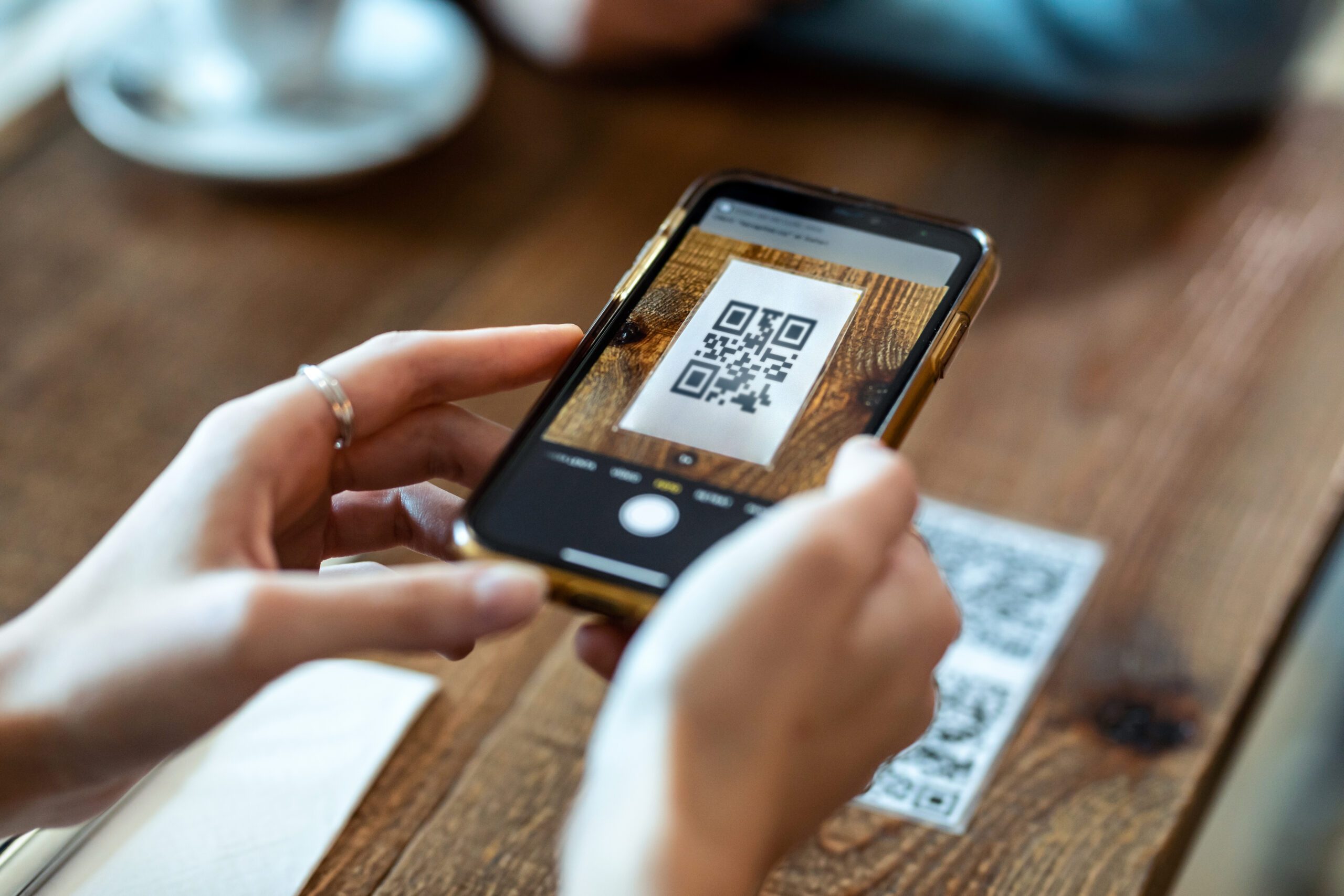
ZIM Connections’ regional and global eSIMs work effortlessly in over 200 destinations. Activation is quick and easy – just use the app or scan a QR code, and you’re ready to go in seconds. You can keep your UK number active for calls and texts while benefiting from local data rates abroad. This dual-SIM functionality ensures cost-effective connectivity and real-time usage alerts, so you can travel without worrying about unexpected charges.
Conclusion
For UK travellers, unexpected roaming charges remain a common issue, with one in ten reporting an unexpectedly high mobile bill after their last holiday. Fortunately, there are practical ways to avoid these surprises. Combining real-time data alerts with regional eSIMs can make a big difference. Data alerts help you track your usage as it happens, while regional eSIMs allow you to connect to local networks at local rates, bypassing hefty roaming fees.
Since Brexit, roaming fees for UK travellers have risen significantly, making it more important than ever to keep a close eye on your mobile data usage.
To tackle these challenges, ZIM Connections offers prepaid regional eSIM plans equipped with built-in usage tracking. Their in-app wallet provides instant updates on your data consumption across more than 200 destinations. This feature helps ensure you stay within your data allowance and avoid extra charges.
By pairing real-time data alerts with prepaid eSIM plans, you can effectively manage your usage and keep control over your expenses during your trip.
Whether you’re travelling for work or leisure, ZIM Connections delivers the tools you need to stay connected across borders without worrying about hidden costs. With clear pricing, real-time tracking, and hassle-free connectivity, managing your mobile expenses becomes simple and stress-free.
FAQs
How can data alerts help you avoid unexpected roaming charges?
Data alerts can be a lifesaver when you’re using mobile services abroad. These alerts keep you updated in real time as your data usage hits certain limits, such as £50, £100, or £200. With this information, you can keep track of your spending, cut back on usage, or switch to Wi-Fi to dodge hefty roaming fees.
Being aware of your data consumption means you can sidestep unexpected charges and stay in control of your budget while travelling. For hassle-free connectivity in over 200 destinations, you might want to check out ZIM Connections. They offer eSIM plans that are easy on the wallet and come with perks like unlimited data and local phone numbers.
Why should I use a prepaid eSIM plan while travelling?
Prepaid eSIM plans offer a straightforward way to stay connected while travelling abroad. By paying a fixed amount upfront in pounds (£), you can sidestep those surprise roaming charges that often come with per-megabyte fees after leaving the UK. Simply switch off your home SIM and rely on the eSIM for your data needs, helping you stick to your budget. Plus, many plans come with real-time usage alerts, so you can keep an eye on your data consumption and avoid exceeding your limit.
Beyond helping you manage costs, prepaid eSIMs are incredibly easy to use. Activation is almost instant – just scan a QR code or use an app. There’s no need to search for a physical SIM or visit a store. Most modern devices are compatible, and a single eSIM can deliver fast 4G/5G speeds, unlimited data, and even a local UK phone number in over 200 destinations worldwide. Whether you’re exploring a new city or staying connected with family and friends, prepaid eSIMs make international travel simpler and more convenient.
How can I avoid unexpected roaming charges while using data abroad?
To avoid unexpected bills when using mobile data abroad, it’s a good idea to set up real-time usage alerts. You can do this through your device or your network provider. These alerts will let you know when you’re approaching your data limit, helping you keep track of your usage. Many smartphones also have an option to set a data cap in the settings. Once you hit this limit, mobile data is automatically disabled, ensuring you don’t go over your budget.
Another way to cut down on data usage is by turning off background syncing for apps like email and social media. Activating your phone’s Data Saver mode can also help reduce unnecessary data consumption. Before your trip, consider downloading maps, music, or videos for offline use. While travelling, make use of Wi-Fi hotspots whenever possible, especially for streaming or other activities that use a lot of data. Switching to low-resolution settings for navigation or similar tasks can also help conserve data.
For a straightforward option, you might want to explore prepaid eSIMs designed for travellers. ZIM Connections provides international eSIM plans with clear data limits and instant usage alerts, making it easy to track and manage your usage. By following these tips, you can stay connected on your travels without the stress of surprise charges.