




Cross-Border eSIM Costs: What to Know
https://www.zimconnections.com/cross-border-esim-costs-what-to-know/
 SHARE
SHARE
Travelling across North America (USA, Canada, Mexico) from the UK? Roaming fees from UK networks can cost £6–£10 per day, adding up to £100+ for a two-week trip. Instead, cross-border eSIMs offer a cheaper alternative, with plans costing £20–£35 for 10–20 GB over 15–30 days. Here’s what you need to know:
- Cheaper than roaming: eSIMs eliminate daily charges, offering upfront pricing in GBP or USD.
- Convenience: No need to swap SIM cards; activate via QR code before travel.
- Regional coverage: Some plans cover all three countries, but double-check for Mexico.
- Data limits: Larger plans are more cost-effective, while small bundles have higher per-GB costs.
- Unlimited plans: Often include speed caps after hitting fair-use limits – read the fine print.
- Extras: Voice/SMS bundles cost more; data-only plans work well with apps like WhatsApp.
For example, a 10 GB plan might cost £12 (£1.20/GB), while a 1 GB plan could cost £4 (£4/GB). Regional eSIMs simplify travel across borders, avoiding roaming fees or multiple plans. Manage costs by estimating your data needs, using Wi-Fi, and choosing the right plan for your trip.
Platforms like ZIM Connections offer North American eSIMs starting at £1.50, with easy activation and transparent pricing. Always check coverage, fair-use policies, and hotspot allowances to avoid surprises. Whether you’re on a short city break or a multi-country tour, planning ahead can save you money and hassle.
BEST 2025 International eSIMs Compared (5 Continents, 21 Months)
How Cross-Border eSIM Pricing Works
If you’re looking to make the most of your eSIM while travelling, understanding how pricing works is key. Unlike traditional UK roaming charges, cross-border eSIMs operate on a one-time fee basis. You pay upfront for a specific data allowance over a set validity period, with no surprise charges waiting for you when you get back home.
For example, North America plans are usually priced in US dollars. At an exchange rate of roughly £0.79 per dollar, a US$15 plan would cost around £12. This upfront pricing is a welcome alternative to traditional roaming fees, which can range from £8 to £12 per day – adding up to as much as £80–£120 for a 10-day trip.
Several factors influence the price of an eSIM: the amount of data included, the duration of the plan, the network speed (4G or 5G), and the geographical coverage (whether it’s limited to the USA or extends to Canada and Mexico). Plans that include voice minutes or SMS tend to be more expensive, though many travellers now rely on VoIP apps like WhatsApp or FaceTime for communication. Below, we’ll break down the main elements that impact pricing.
Main Pricing Components for North America eSIMs
Data allowance is the biggest factor affecting cost. Smaller bundles, such as 1 GB for 7 days, are available for about US$5–7 (around £4–£5.60). Larger plans, like 20 GB for 30 days, typically range from US$18–37 (approximately £14–£29.50). Generally, the more data you purchase upfront, the lower the cost per gigabyte. For instance, a 3 GB plan priced at US$9 (around £7) costs about £2.33 per GB, whereas a 10 GB plan at US$15 (roughly £12) works out to just £1.20 per GB.
Validity periods also play a role. Plans generally last between 3 and 30 days. A 7-day plan might cost anywhere from £4 to £25, while monthly bundles for longer trips range from about £20 to £60. Longer validity often provides better value. For example, some unlimited plans charge around £5.90 for a single day but drop to about £20.20 for a week – bringing the daily cost down from nearly £6 to under £3.
Network speed is another consideration. Plans offering 5G access in major cities in the US and Canada are typically priced higher than those limited to 4G. For activities like video calls and streaming, 5G can make a noticeable difference. However, in areas like Mexico and rural parts of North America, 4G is more prevalent, and choosing a 4G-only plan can save money without sacrificing much in terms of connectivity.
Unlimited plans often come with speed caps after a certain data threshold. For example, some plans offer 20–50 GB at full speed before throttling speeds, sometimes down to 2G levels. For heavy users, these plans can lose their appeal once throttling kicks in. It’s worth checking the fair-use policy to understand how much high-speed data you’ll actually get. Some plans might throttle speeds to 512 kbps after you hit the limit, while others may not clearly disclose this information.
Voice and SMS bundles tend to increase costs. Data-only eSIMs are the most budget-friendly, often starting at under £5 for small data packs. These work well for travellers who rely on VoIP apps for calls. However, if you need to receive calls on a local number – say, for business meetings or hotel bookings – bundled voice and SMS plans for the USA, Canada, and Mexico may be worth the extra expense.
For light or unpredictable usage, some providers offer pay-as-you-go options. These typically charge around US$2.45 per GB (about £1.90) on top of a small base fee. On the other hand, budget plans for minimal needs – like 500 MB for 30 days – can cost as little as US$0.48 (under 50p). These are ideal for travellers who mainly rely on Wi-Fi and only need data for maps or messaging.
How Regional eSIMs Differ from Single-Country Plans
Regional coverage is another factor that can influence pricing. Single-country eSIMs, such as those limited to the USA, often offer the lowest cost per gigabyte because they benefit from wholesale rates in a single market. For example, a USA-only plan might provide 10 GB for 30 days at around £12–£13, making it a great option if you’re staying within the country. However, these plans typically stop working once you cross into Canada or Mexico, leaving you to either pay out-of-bundle charges or purchase an additional eSIM – costs that can quickly add up.
Regional eSIMs, which cover the USA, Canada, and Mexico, are designed for seamless travel across borders. Whether you’re driving from New York to Toronto or flying from Los Angeles to Cancún, you won’t need to switch profiles or worry about roaming fees. While these plans usually cost a bit more than USA-only bundles, they offer better convenience. A 15 GB regional plan valid for 30 days might cost around £15–£18, compared to £12–£14 for a USA-only plan.
This small extra cost can save you from unexpected roaming fees or the hassle of activating multiple plans. For UK travellers planning multi-country road trips, cruises, or business trips across all three countries, regional eSIMs are often the smarter choice. They eliminate the need for separate activation fees and ensure consistent connectivity throughout your journey.
However, not all "North America" plans include all three countries. Some providers label plans as "North America" but only cover the USA and Canada, excluding Mexico. Always double-check that all three countries – USA, Canada, and Mexico – are explicitly listed before making a purchase, especially if your travel involves crossing borders.
Common Cost Problems with Cross-Border eSIMs
For UK travellers heading to North America, cross-border eSIMs can sometimes lead to unexpected expenses. Issues such as pricey small data bundles, misleading "unlimited" plans, and costly extensions or top-ups can quickly add up. Knowing these potential pitfalls before your trip can help you make smarter choices and avoid unpleasant surprises.
Higher Per-GB Costs on Small Data Plans
At first glance, small data bundles might seem like a cost-effective choice. However, they often come with a much higher cost per gigabyte compared to larger plans. For example, a 1 GB plan for 7 days might cost around US$4–5 (approximately £3.20–£4), while a 10 GB plan for 30 days could be priced at US$15 (about £12). That brings the per-GB cost down to roughly £1.20, a significant saving compared to the smaller bundle.
The reality is that even light internet use can consume more data than expected. For instance, a casual user might need 3–5 GB for a week, while someone more active could easily burn through 8–10 GB or more. Opting for a small plan to "stay safe" might actually backfire, as frequent top-ups can end up costing far more than a single, larger bundle.
Fair-Use Limits on Unlimited Plans
The term "unlimited" can be deceiving when it comes to eSIM plans in North America. Many of these plans include fair-use caps, which, once exceeded, result in reduced speeds. After hitting the limit, your connection may slow to the point where it’s only suitable for basic tasks like browsing or messaging. This can be especially frustrating for longer trips or when engaging in data-heavy activities such as video calls, streaming, or using your phone as a hotspot.
Some providers also impose additional restrictions, such as disabling tethering after the fair-use limit is reached. To avoid surprises, it’s crucial to read the fine print – check for details on high-speed data limits, throttled speeds, and any usage restrictions.
Costs of Plan Extensions and Top-Ups
Running out of data mid-trip can lead to steep charges for extending your plan or purchasing additional data. Short-term extensions or small top-ups often come with a higher per-GB or per-day cost than longer base plans. For example, a daily unlimited add-on might cost £5–6, whereas a 15- or 30-day package could bring the daily cost down to under £2.
Unexpected itinerary changes can leave you scrambling for a new plan, which may result in paying more than necessary. App-based top-ups might seem convenient, but frequent small charges can quickly add up and surpass the cost of a more comprehensive base plan.
How to Choose the Right eSIM Plan
Picking the right cross-border eSIM plan means aligning its coverage, data limits, and fair-use policies with your travel plans and budget. The goal? Avoid hidden fees and throttled speeds while ensuring you have enough data without overspending. A thoughtful selection process can help you dodge unnecessary expenses and stay connected when it matters most.
Plan Evaluation Checklist
Before committing to an eSIM plan, double-check a few key points to avoid surprises. Start with country coverage. Some "North America" plans may exclude parts of Canada or Mexico or only cover major cities. Make sure every destination on your itinerary is explicitly listed. For instance, if you’re driving from Toronto to New York or touring multiple US and Mexican cities, a regional plan covering all three countries will save you from switching profiles mid-journey.
Next, confirm device compatibility. Your phone must support eSIM technology and be network-unlocked. Even if your device is eSIM-capable, a locked phone may reject third-party profiles. Also, check that the plan supports the necessary 4G/5G bands to ensure smooth streaming and calls.
Look closely at the pricing breakdown. Convert the cost from USD to GBP and compare the price per GB across various plans. For example, a 10 GB plan costing $15 translates to about £12, or £1.20 per GB – far better value than a 1 GB plan priced at $5 (£4 per GB).
Pay attention to data caps and speed tiers. These define how much high-speed data you get before your connection slows down or stops altogether. For "unlimited" plans, revisit the earlier section on fair-use limits – heavy throttling can make these plans less practical for video calls or cloud apps.
Check the plan’s hotspot allowance. Some eSIMs block tethering entirely, while others limit it to a small portion of your total data. This is crucial if you plan to share your connection with a laptop or tablet.
Finally, verify if top-ups or extensions are affordable and straightforward. Can you add extra data or days at the same per-GB rate, or would you need to buy a new plan? Find out if there are minimum top-up amounts or additional fees.
Following these steps will help you choose a plan that balances cost, coverage, and convenience.
Matching Data Plans to Your Usage
Once you’ve confirmed the basics, focus on how much data you’ll actually need. Estimating your daily usage is key. Light users – those who primarily use messaging apps, check maps occasionally, and browse lightly – can often keep daily usage between 200–300 MB by downloading offline maps and limiting background app activity. For a short city break in New York or Toronto, a 1–3 GB plan should suffice. Moderate users who share photos and use navigation apps more frequently might prefer 3–5 GB to allow for unexpected needs like ride-hailing or social media.
Moderate users typically consume 500 MB to 1 GB daily, especially in larger cities where online services are more integral. For a 7–10 day trip covering multiple cities, a 10–20 GB regional plan is often the best fit. Heavy users, such as remote workers or those who stream videos and upload large files, might need 20–30 GB or an "unlimited" plan with clear fair-use terms.
Heavy users should plan for 1–3 GB per day, especially if tethering a laptop or streaming music and video. For extended road trips across the US and Canada, it’s wise to start with a moderate plan and top up as needed rather than committing to a high-cap plan upfront.
If your trip involves crossing borders, consider a regional North America plan to simplify logistics and avoid unexpected charges. While single-country eSIMs might offer lower costs or higher data caps, they often stop working or incur roaming fees once you cross a border.
For short trips, light users might stick to a 1–3 GB plan, while moderate users may opt for 3–5 GB. For week-long holidays, 10–20 GB suits most moderate users, and heavy users should aim for 20–30 GB or an unlimited option with transparent terms. On longer trips, match the plan to your full stay, adding a buffer for delays. Short-term unlimited passes can work well for long weekends, while 30-day plans are ideal for extended road trips or multi-city tours.
For UK travellers, services like ZIM Connections offer a range of local, regional, and global eSIM plans with transparent pricing and multi-country coverage. Their prepaid bundles, easy online activation, and 4G/5G support in over 200 destinations let you compare options based on coverage, cost per GB in GBP, fair-use policies, speed tiers, and hotspot support. With plans starting at just £1.50, ZIM Connections caters to both light and heavy users, whether you need a small data boost or a local phone number for your travels.
sbb-itb-273ea09
Ways to Manage and Reduce eSIM Costs
Planning ahead, tweaking device settings, and selecting the right plan can help you cut costs while staying connected.
Pre-Trip Planning and Setting a Budget
Once you understand eSIM pricing, the next step is to plan your usage to keep expenses under control. Start by reviewing your past mobile data usage in your phone’s settings. For instance, if you typically consume about 30 GB a month (roughly 1 GB per day), a two-week trip to North America might require around 14–20 GB, especially if you anticipate heavier use of maps or photo sharing.
To estimate costs, multiply your daily data needs by the plan’s per-GB price. For example, if a 20 GB bundle costs £20, that works out to £1 per GB. If you expect to use 18 GB, your total would be about £20, leaving a little extra for unexpected usage.
Break this total down into a daily budget. Using in-app tools to set usage alerts at 50%, 80%, and 90% of your data limit can help you avoid running out and needing costly emergency top-ups.
Your trip’s length and itinerary also influence the best plan choice. A short, single-city trip of less than 10 days might be covered by a country-specific plan with 7–10 days’ validity. Longer stays, such as multi-week holidays or remote work trips, may benefit from 30-day or extended plans, which tend to offer better per-day and per-GB pricing. If your travels include multiple North American countries, consider a regional eSIM plan that covers the US, Canada, and Mexico in one bundle. This avoids the hassle and expense of separate plans or roaming fees when crossing borders.
Reducing Data Usage
One of the easiest ways to save on mobile data is to download key content over Wi-Fi before your trip. Offline maps, translation packs, guidebooks, and restaurant lists can all be accessed without eating into your data allowance. This way, you can use GPS navigation and other apps without worrying about high mobile data consumption.
During your trip, take advantage of Wi-Fi whenever possible for messaging or browsing. Disable auto-download settings in chat apps to avoid unseen data usage, and skip live video calls unless you’re on a reliable Wi-Fi connection – these can burn through 1–2 GB per hour.
You can also adjust your device settings to cut down on hidden data drains. On both iOS and Android, restrict background data for non-essential apps, turn off automatic updates over mobile networks, and pause cloud backups for photos and videos. Enabling "data saver" mode and disabling features that switch to mobile data when Wi-Fi is weak can further help manage your usage.
Streaming and social media often consume large amounts of data. Lower video quality to 480p or below in streaming apps, and download shows or playlists over hotel or café Wi-Fi for offline use. For social media, set auto-play for videos to "Wi-Fi only" so that your feed loads primarily text and images instead of high-data videos.
By cutting unnecessary data use, you can stick to a plan that matches your actual needs.
Choosing the Right Plan for Better Value
Small data bundles often have a higher cost per GB. For example, a 1 GB plan might cost £5, while a 20–50 GB bundle reduces the per-GB cost to around £0.74. For moderate to heavy users, larger bundles are usually more economical, especially for trips lasting two weeks or more. Opting for a bigger plan upfront can save money compared to multiple small top-ups.
When reviewing plans, carefully check the details of "unlimited" options. Some may have speed caps or tethering restrictions that could impact your budget. Look for plans with clear terms that align with your usage patterns.
For travel across North America, a regional eSIM plan can simplify things by covering the US, Canada, and Mexico under one affordable package. Providers like ZIM Connections offer regional plans designed to meet these needs, with transparent pricing and a range of options for data volume and validity. Starting at £2.30, their plans cover over 200 destinations and let you manage activation and monitor usage through a single interface. This eliminates the risk of overlapping plans or unexpected roaming fees as you move between countries. By comparing options, you can find a bundle that fits your budget and travel requirements perfectly.
Using ZIM Connections for North America Travel
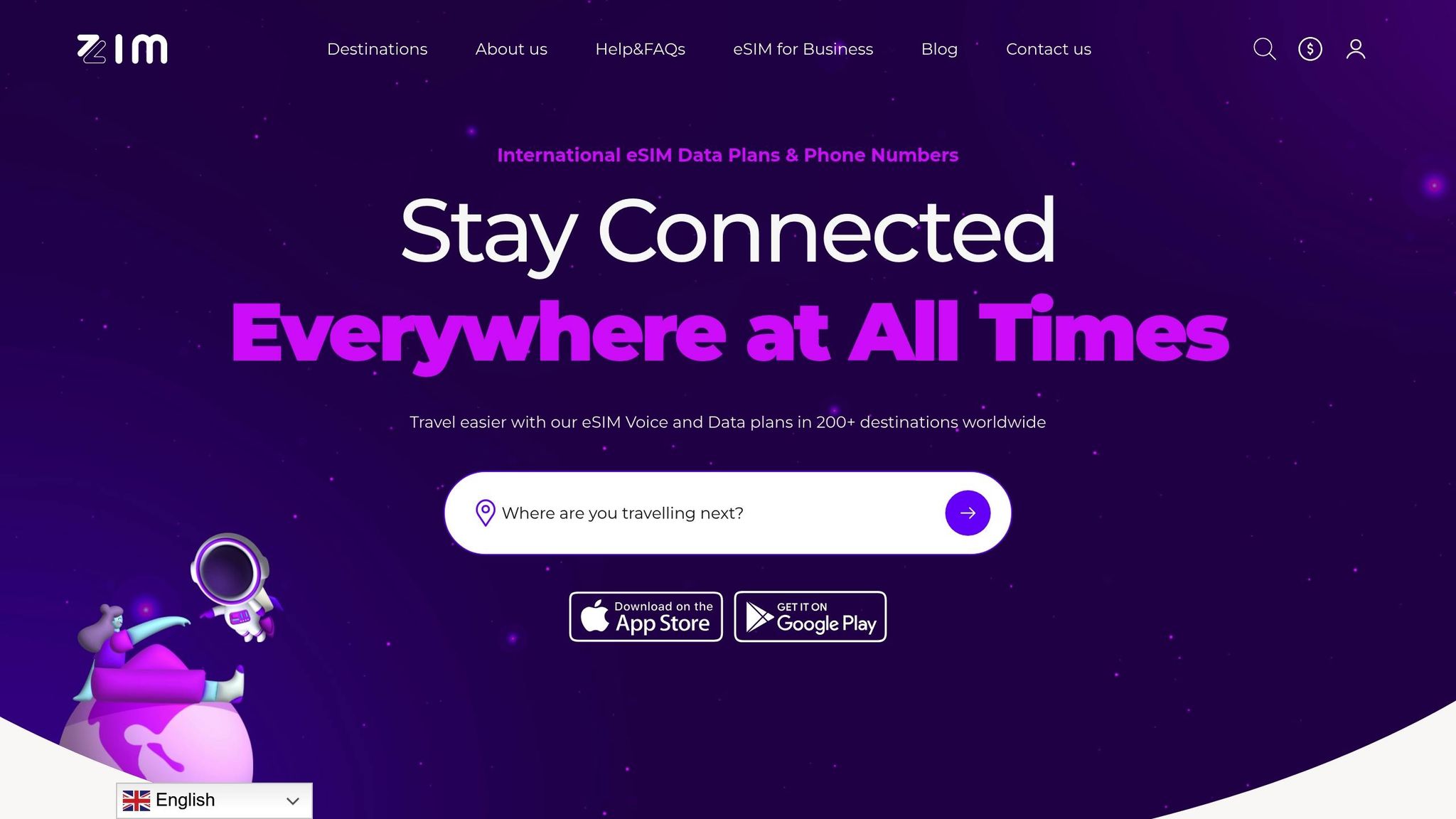
When it comes to travelling across North America, ZIM Connections offers a straightforward way to stay connected without the hassle of juggling multiple plans or worrying about hidden fees. With prepaid regional plans, you can easily manage your mobile data budget while avoiding the pitfalls of traditional roaming charges. Their eSIM service covers the United States, Canada, and Mexico under a single plan, letting UK travellers move seamlessly between these countries without switching profiles or encountering unexpected costs.
ZIM Connections’ Regional Plans
ZIM Connections provides a convenient regional eSIM package that works across all three major North American countries. These plans rely on local partner networks to deliver consistent 4G/5G connectivity, ensuring smooth performance for navigation, calls, and streaming.
The prepaid structure is simple: you pay upfront for a set amount of data and a defined validity period. This means you know exactly what you’ll spend – calculated in pounds – before leaving the UK. No contracts, credit checks, or surprise fees to worry about. With coverage spanning over 200 destinations worldwide, the regional plan keeps you connected across the US, Canada, and Mexico without needing separate bundles or facing roaming charges.
Activating your eSIM is quick and easy. Use a QR code to set it up before you travel, and once you land, just turn on data roaming to get connected in minutes. This eliminates the hassle of hunting for a physical SIM card at the airport or waiting for activation.
For those with higher data needs, ZIM Connections offers unlimited data options, while smaller bundles cater to lighter users. You can monitor your data balance via an app or dashboard and, if necessary, buy top-ups without reinstalling or switching plans. This flexibility ensures you’re covered for unexpected usage – whether it’s extra navigation or a few video calls – while keeping your budget intact.
Plans for Different Travel Scenarios
ZIM Connections tailors its plans to suit a variety of travel needs across North America, making it easier to pick the right option for your trip.
For short city breaks lasting five to seven days, a regional eSIM with 3–5 GB of data is ideal. It covers essentials like maps, ride-hailing apps, restaurant searches, and occasional video calls. By keeping your UK SIM inactive for mobile data, you avoid roaming charges and stick to the prepaid plan’s cost. This often works out cheaper than UK network roaming add-ons when you compare the cost per GB.
For longer trips, such as a two-to-three-week multi-country tour, a single regional eSIM simplifies everything. Picture a family exploring California, British Columbia, and Mexico’s Yucatán Peninsula. With one plan, there’s no need for reinstallations or number changes. A 15–25 GB bundle is typically enough to handle navigation, social media, streaming, and work emails. This approach not only saves money compared to separate national eSIMs or traditional roaming but also makes budgeting easier. Plus, shared tethering helps keep overall data use predictable.
For extended stays of 30 days or more – whether you’re working remotely, studying, or on a business trip – opt for plans with longer validity or larger data allowances. These options often reduce the cost per GB compared to repeatedly buying short-term packages. If you’re a heavy user relying on video calls, large file transfers, or constant streaming, high-capacity or unlimited-style plans are worth considering. Just keep an eye on fair-use policies that might affect speeds after a certain threshold. Tracking your usage early in your trip can help you decide whether to top up or switch to a different tier to stay within your budget.
Before you travel, make sure your device is ready and disable data roaming on your UK SIM to avoid accidental charges. To minimise in-trip data usage, set alerts on your device, turn off automatic cloud backups and app updates, and download offline maps or entertainment ahead of time. Familiarising yourself with ZIM Connections’ support channels and billing dashboard can also help you stay on top of your spending and quickly resolve any issues.
When comparing options, regional eSIM plans often work out cheaper than UK network roaming add-ons for multi-country trips, especially when you look at the cost per GB rather than just the upfront price. Transparent prepaid pricing also avoids surprise currency conversion fees. Consider your destinations, trip length, and personal data needs when weighing up ZIM Connections against traditional roaming packages or local eSIMs. For weekend getaways, two-week holidays, or month-long adventures across North America, regional plans usually offer the best value.
Conclusion
The cost of cross-border eSIMs hinges on factors like data allowances, fair-use limits, and roaming zones. Before leaving the UK, it’s wise to compare coverage options and validity periods. While a larger data bundle may seem like a bigger upfront expense, it often proves more economical for trips lasting a fortnight or longer, especially when compared to repeatedly purchasing small top-ups or opting for "unlimited" plans with speed restrictions after a certain usage threshold.
To make the most of your eSIM, consider the following: confirm the countries covered under your plan, estimate your daily data needs, ensure the plan duration aligns with your travel itinerary, and decide if you require calls and texts or if a data-only option suffices. For UK travellers moving across borders – such as driving from California to British Columbia or flying from New York to Mexico City – regional North America plans simplify the process and help avoid unexpected charges.
Start by setting a realistic budget in pounds and identifying your data requirements. Narrow down two or three regional plans that suit your itinerary and budget. Install the eSIM before your trip, monitor your usage through the provider’s app, and adjust your habits accordingly. For instance, use Wi‑Fi for data-heavy activities like streaming or uploading large files, download offline maps and entertainment while still on UK Wi‑Fi, and disable background data for non-essential apps. Checking your usage daily can also prevent overspending and ensure your plan lasts the entire trip.
As highlighted earlier, choosing a plan tailored to your travel needs is crucial. Platforms like ZIM Connections offer regional North America eSIMs that work seamlessly across borders with a single profile. Their prepaid, contract-free plans include high-speed 4G/5G data, local numbers, and quick activation. With coverage spanning over 200 destinations and prices starting at around £1.60, it’s easier than ever to find a plan that matches both your trip’s length and data requirements.
Using a UK network for roaming often ends up being far more expensive than a dedicated regional eSIM, particularly when comparing the cost per gigabyte. By planning ahead, applying the tips shared in this article, and selecting the right eSIM plan, you can enjoy your travels across North America with predictable and manageable data costs.
FAQs
How can I choose the best eSIM data plan for travelling in North America?
Choosing the right eSIM data plan for travelling in North America comes down to your specific needs and habits. Think about how much data you’ll require – whether it’s for browsing, streaming, or using navigation apps. If your trip involves multiple countries, a regional or global plan might save you the hassle of switching between local options.
ZIM Connections offers a range of flexible eSIM plans designed with travellers in mind. Their prepaid options include unlimited data, 5G/4G internet, and even local phone numbers. With just one eSIM, you can stay connected across multiple destinations, making it a convenient choice for both short getaways and longer adventures.
What should I watch out for with ‘unlimited’ eSIM plans, and how can I manage these issues?
While ‘unlimited’ eSIM plans may sound tempting, they often come with strings attached that can leave users frustrated. Some of the most common pitfalls include data speed reductions after hitting a usage cap, fair usage policies that limit heavy data consumption, and extra charges for features like tethering.
To steer clear of unpleasant surprises, take the time to thoroughly read through the terms and conditions of your plan. Pay close attention to details about speed throttling, data caps, and any potential hidden fees. For those planning to travel internationally, opting for a provider like ZIM Connections could be a smart choice. They offer prepaid eSIM plans designed specifically for global travellers, giving you the convenience of staying connected without the worry of unexpected costs or restrictions.
Can I use my current phone with a cross-border eSIM, and what should I check before setting it up?
Yes, you can keep using your current phone with a cross-border eSIM, as long as it meets a few key requirements. First, make sure your device is unlocked and supports eSIM technology. While most modern smartphones are equipped for this, it’s worth taking a moment to verify the specifications for your specific model.
You’ll also want to ensure that the eSIM plan you select is compatible with the countries you’re visiting and provides the coverage you need. This way, you can stay connected without worrying about unexpected charges or disruptions during your travels.